
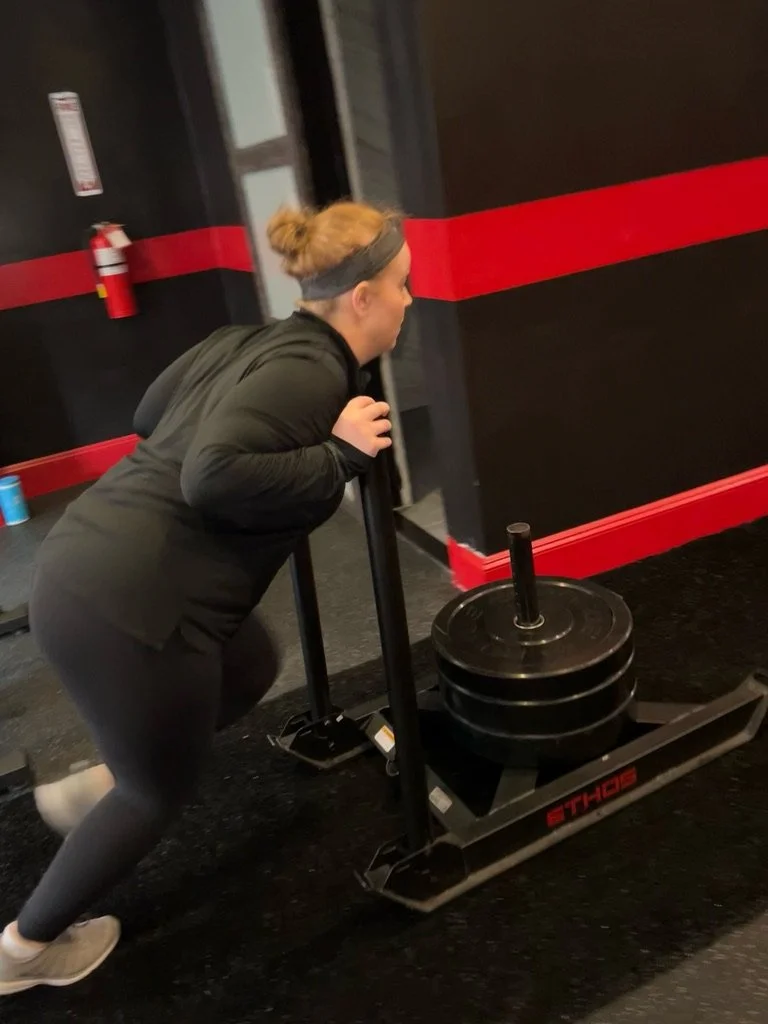
INTELLIGENT CONDITIONING: THE PREMIUM APPROACH TO HIGH-PERFORMANCE BODY COMPOSITION
There is a destructive myth in the fitness world: to get in shape, you must break yourself.
Many people believe that a successful workout requires leaving the gym exhausted, drenched in sweat, and barely able to walk down the stairs. But this "more is always better" mentality is a shortcut to joint pain, chronic fatigue, and elevated stress hormones that prevent your body from dropping fat and building lean muscle.
At Canadian Park Training, we believe in intelligent conditioning—a science-based, highly personalized approach to body composition that leaves you energized and resilient.
The Hidden Cost of High-Stress Workouts
Your body does not distinguish between the stress of a demanding career, poor sleep, and a joint-crushing workout. When you stack high-impact exercise on top of an already busy, high-stress lifestyle, your body releases chronic levels of cortisol. This can lead to:
Stubborn abdominal fat retention
Muscle tissue breakdown (the engine of your metabolism)
Disrupted sleep patterns and poor recovery
Our goal is to apply the minimum effective dose of exercise stress required to trigger positive adaptation. We train hard, but we train with absolute precision.
The Canadian Park Training Formula for Body Composition
We achieve exceptional, lasting physical conditioning through a three-pronged approach:
Metabolic Strength Training
We prioritize progressive resistance training. Muscle tissue is metabolically active; by building lean, dense muscle, we permanently elevate your resting metabolic rate so you burn energy even when you're resting.
Low-Impact Energy System Development
Rather than generic, high-risk plyometrics, we utilize low-impact, high-intensity aerobic and anaerobic conditioning tools that challenge your cardiovascular system without pounding your knees, hips, and lower back.
Autoregulated Recovery Support
We monitor your daily readiness. If you arrive at our studio stressed and sleep-deprived, we adjust your program to focus on recovery-based conditioning, ensuring you leave feeling better than when you walked in. Getting in shape shouldn't be a punishment. It should feel like an upgrade to your daily vitality.
Experience Premium Personal Training in Boston
Click here to schedule an initial Canadian Park Training consultation.
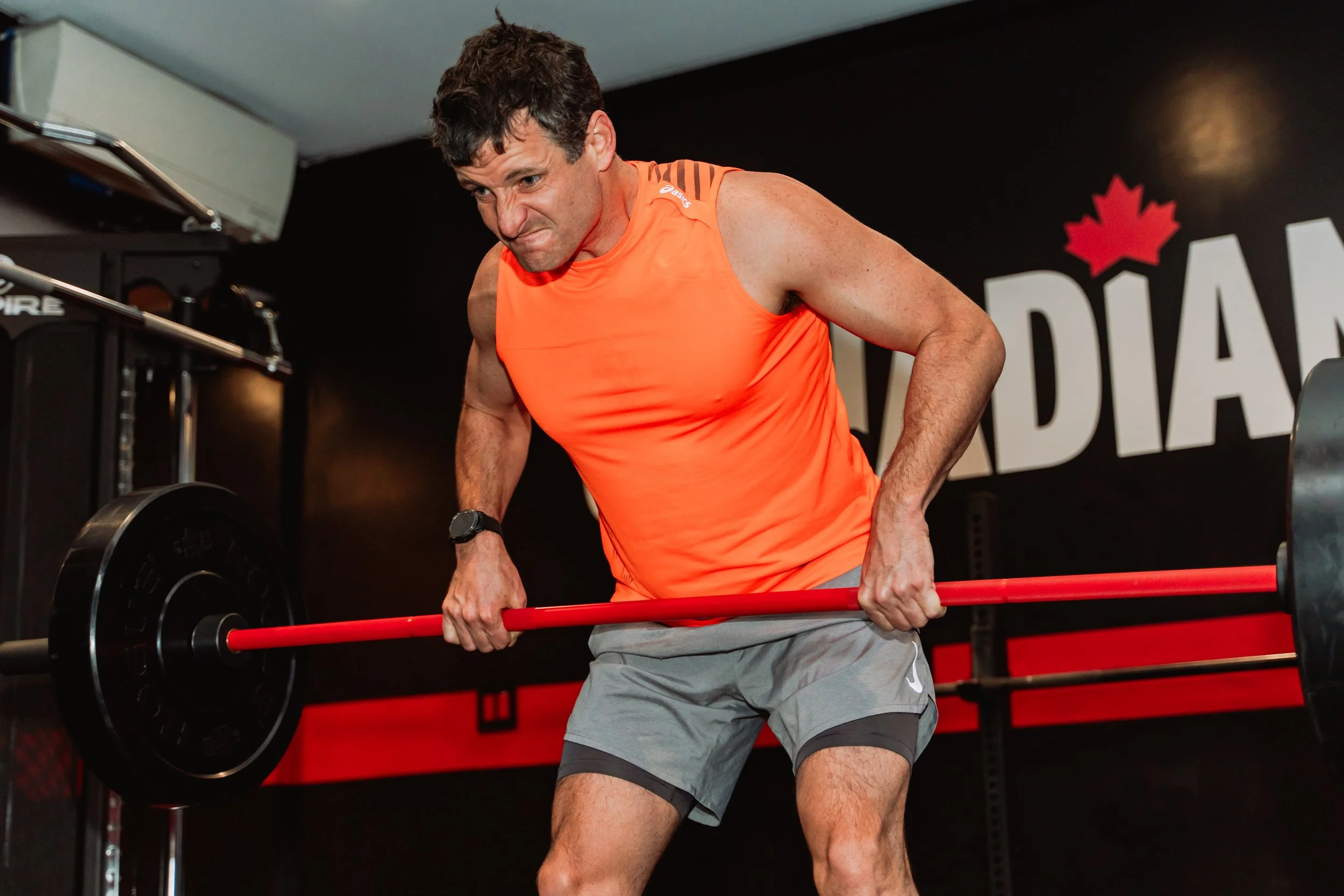
Your Invisible Armor: Redefining Core Training for Strength and Longevity
If you ask the average person what "core training" means, they could describe variations of crunches, sit-ups, and leg lifts. They might talk about chasing the “summer 6-pack”.
But at Canadian Park Training, we view the core differently. We view it as your invisible armor - a complex, coordinated system of muscles designed to stabilize your spine, transfer power, and protect your body from the wear and tear of daily life.
The Sit-Up Fallacy
Traditional crunches and sit-ups focus entirely on spinal flexion (bending your spine forward). The reality? Your spine has a limited number of flexion cycles before the discs begin to wear down. Pulling your neck and curving your lower back repeatedly also does little to prepare your body for the real world.
Your core’s primary job isn't to create movement, but to prevent unwanted movement. It acts as a stabilizer to keep your spine safe while your limbs move.
The Three Dimensions of Real Core Stability
To build a resilient body, we focus core training around 3 fundamental "anti-movements":
Anti-Extension: Training your core to prevent your lower back from arching excessively (e.g., during overhead movements or running).
Anti-Lateral Flexion: Training your side-core muscles (like the obliques and quadratus lumborum) to resist bending sideways under a load, protecting your spine from uneven forces.
Anti-Rotation: Training your body to resist twisting forces, which is key to pain-free golf swings, running gaits, and sudden physical movements.
The Power Transfer Concept
Think of your core as a bridge. If a bridge is soft and unstable, power cannot travel across it. Whether you are running a marathon, swinging a tennis racket, or simply picking up a heavy suitcase, a rock-solid core ensures that power generated by your lower body transfers seamlessly to your upper body without stressing your joints.
At Canadian Park Training, every exercise we use is a core exercise. By teaching you how to properly brace, breathe, and align your pelvis, we give you the strength and physical confidence that carries over into everything you do.
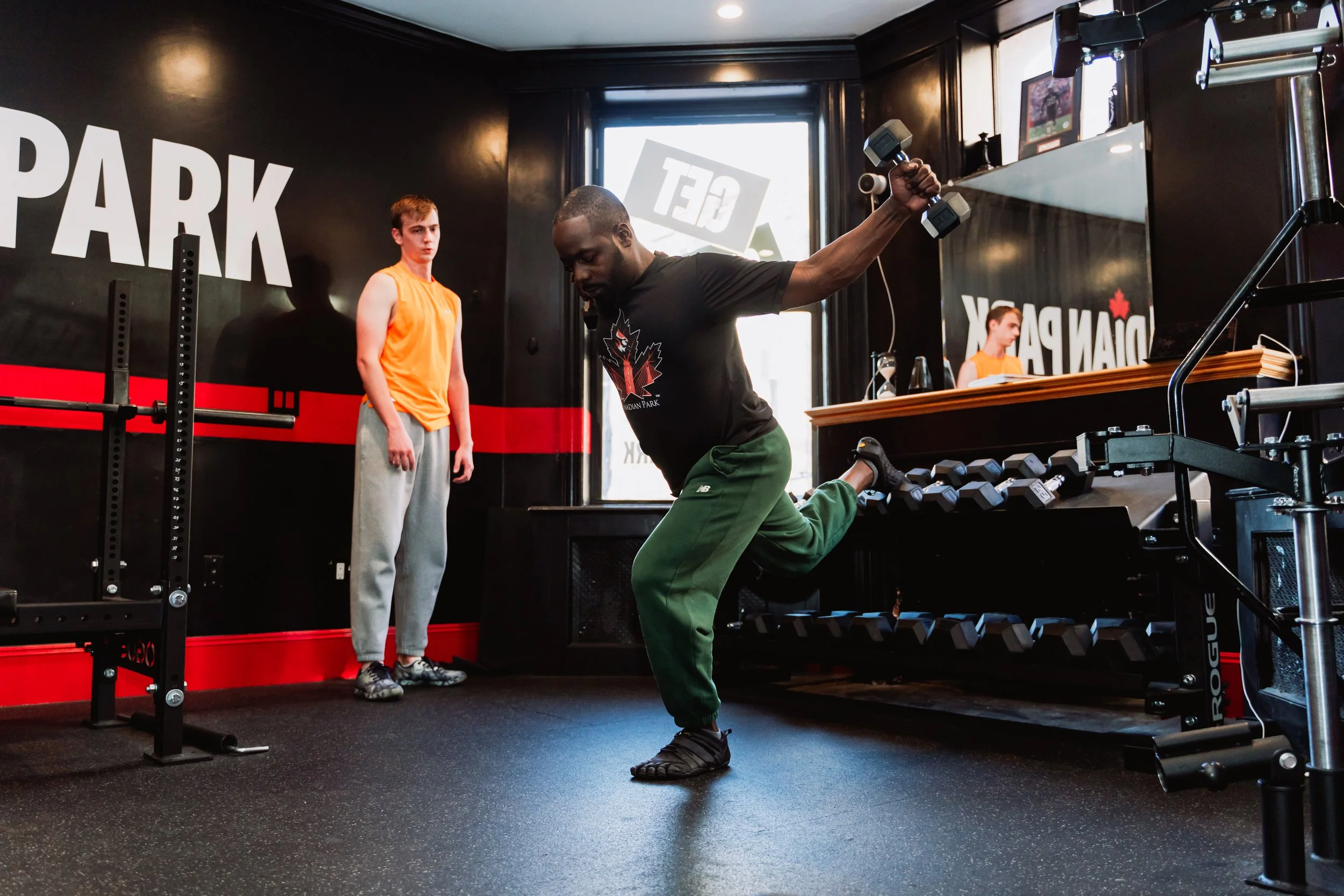
Why True Mobility is the Ultimate Luxury in Modern Fitness
In our fast-paced, high-achievement lives, we measure physical success by the numbers: the weight on a bar, the pace on a watch, or the percentage on a body-fat scale. But there is a silent, far more critical luxury that cannot be measured by a scale: true mobility.
To the untrained eye, mobility is often confused with flexibility. But there is a difference between the two:
Flexibility is passive. It is how far a muscle can stretch when a force is applied.
Mobility is active. It is your ability to control, stabilize, and power a joint through a range of motion.
The "Desk-to-Gym" Trap
For many high-performing professionals in Boston, most of the day is spent locked in a sedentary posture – “tech neck”, hips flexed, shoulders rounded, spine frozen over a keyboard. When you transition directly from this compressed state into a high-intensity workout without addressing your joint mechanics, your body compensates. Your lower back takes the load that your hips should be carrying; your neck and shoulders strain to make up for a stiff upper spine.
The Canadian Park Standard
At Canadian Park, we treat mobility as the foundation of all physical performance. Our process begins not with a sweat-inducing workout, but with a highly sophisticated, joint-by-joint movement assessment. We look at:
Spine Rotation: Restoring the rib cage's ability to turn, which takes stress off your lower back.
Hip Function: Unlocking tight hip flexors and activating glutes to protect your knees and lower spine.
Ankle and Shoulder Kinematics: Restoring full range of motion so your overhead presses and running strides are smooth and pain-free.
True mobility is moving through your day without restriction, tension, or the fear of injury.
Our Newbury Street Invitation: Don’t let your work habits dictate your lifestyle.
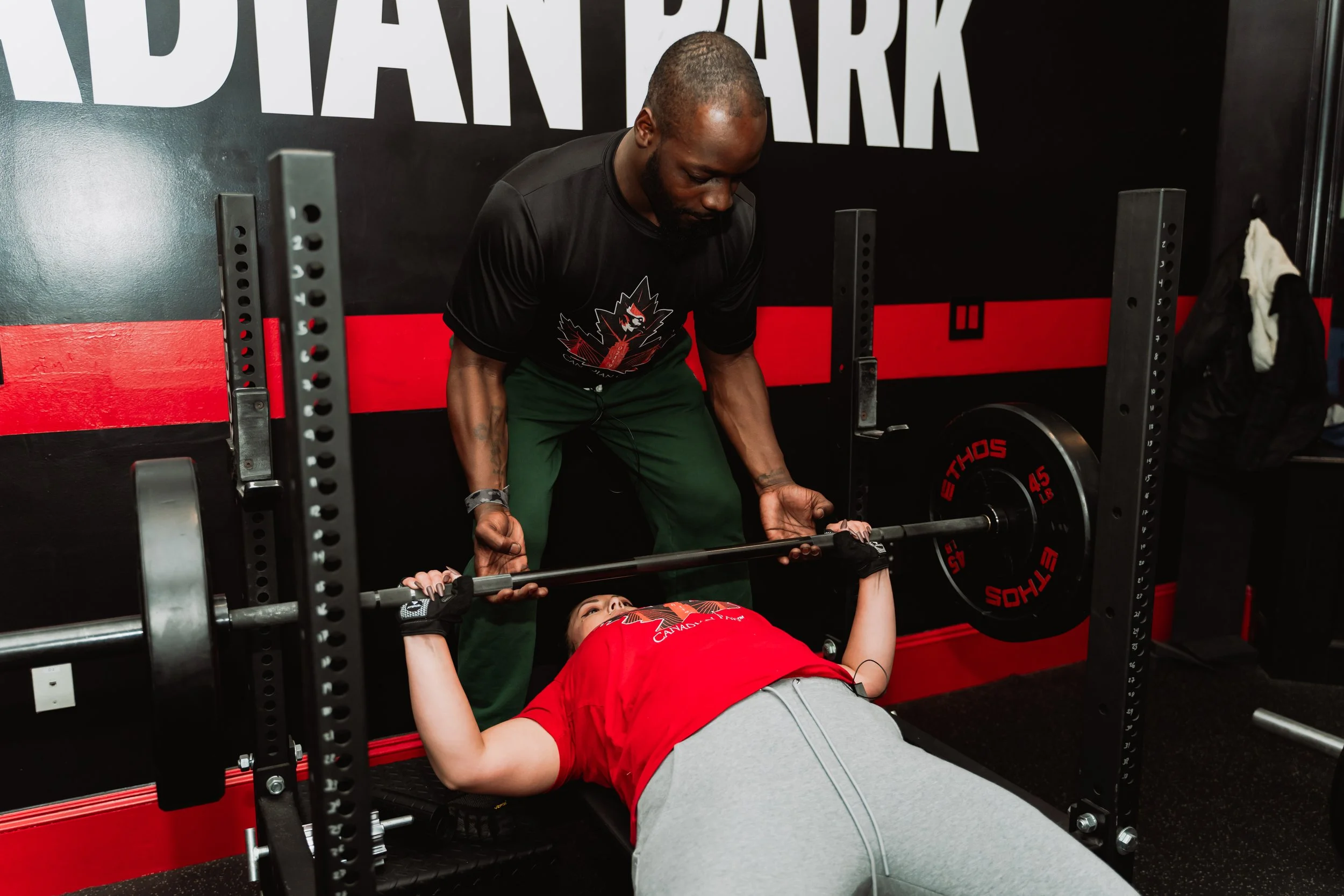
Lost in the Crowd: The Difference Between True Personal Coaching and Group Training Classes
Walk into almost any boutique training facility today, and you will find "small group training" or "semi-private" sessions on the schedule. It sounds like an appealing concept - the camaraderie of a group combined with the expertise of a personal coach. But look closer, and you often find these sessions are simply high-speed, high-density classes in disguise.
The "One-Size-Fits-None" Trap
In many "small group" settings, a single coach is responsible for managing 5 to 10 people at once. Because the coach cannot watch everyone simultaneously, the session relies on standardized, timed intervals, and generic exercises.
The individual recovering from a shoulder injury is forced to do the same overhead movements as everyone else.
The runner looking to build core stability is put through a rapid-fire circuit that compromises their joints.
The beginner is left to navigate complex movements with minimal, rushed guidance.
This isn't coaching. This is merely a group class where you share space with a trainer. It is a highly inefficient, high-risk way to train.
The Canadian Park Difference: True Individualized Training
At Canadian Park Training, we refuse to dilute the quality of our coaching. We understand that your body, your injuries, your daily stress levels, and your goals are entirely unique.
When you train with us, your program is custom-tailored to your personal profile. We adjust every set, rep, and weight selection to match your personal capabilities. You are never a face in a crowd or a number on a sign in sheet. You receive dedicated, professional coaching designed exclusively for you.
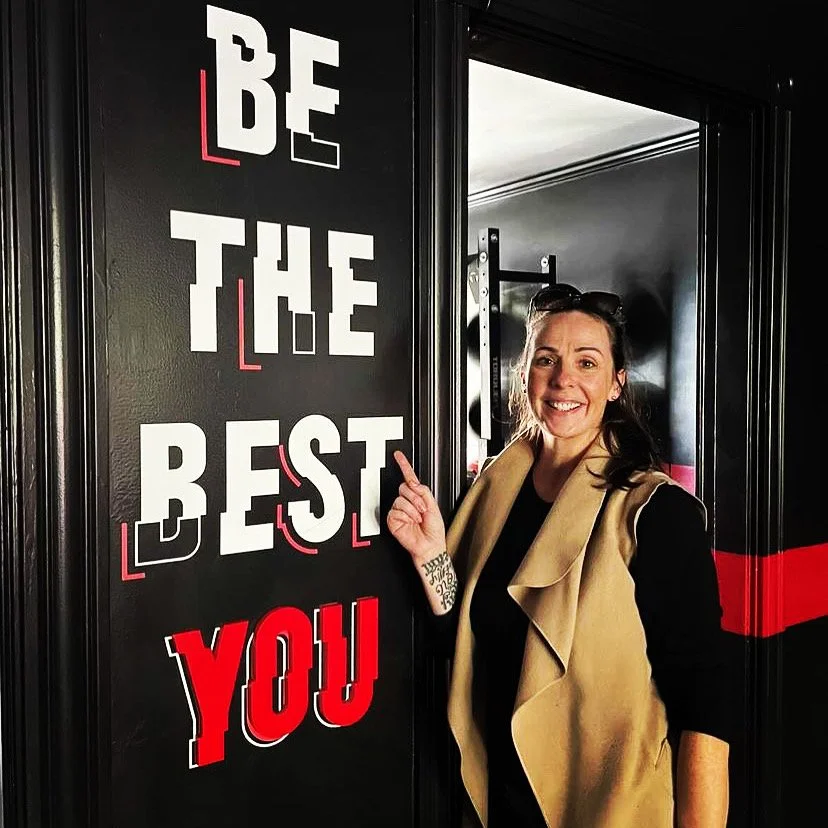
Elevating Strength Through Pregnancy, Postpartum, and Menopause
A woman’s body navigates hormonal, structural, and physiological shifts. From pregnancy and rebuilding the postpartum body to the hormonal transitions of perimenopause and menopause, these life stages demand an intelligent strategy for strength.
Yet, traditional fitness often offers generic, high-impact routines that ignore pelvic health, or "light cardio" that fails to protect muscle mass and bone density.
At Canadian Park, we believe women deserve a sophisticated standard of care. True fitness isn't about pushing through pain or doing the same workout at 50 that you did at 25. It’s about training your core, mobility, and metabolism to support your body at every stage.
Phase 1: Pregnancy & The Postpartum Rebuild
During pregnancy, your body undergoes structural changes: the center of gravity shifts forward, joints loosen, and the abdominal wall stretches to make room for growing life. Rather than stopping exercise or guessing what is safe, our prenatal training emphasizes:
Intra-Abdominal Pressure & Breathing
Posterior Support
Postpartum Restoration
Postpartum training is not about "bouncing back"—it is about rebuilding from the inside out. Traditional crunches or heavy loading too early can worsen issues like abdominal separation or place excessive downward pressure on the pelvis. We restore deep core integrity first before reintroducing heavy resistance or dynamic movement.
Phase 2: Perimenopause & Menopause
As women transition into perimenopause and menopause, declining estrogen levels alter body composition, metabolic rate, bone density, and muscle proteins. During this phase, workouts or cardio can backfire by elevating stress and accelerating muscle loss. In menopause, progressive strength training and intelligent core stability are needed to:
Protect Bone Mineral Density
Preserve Lean Metabolic Tissue
Develop Midsection Stability & Visceral Health:
Canadian Park for Women’s Health
At Canadian Park, we don’t apply cookie-cutter templates to complex female physiology. Your programming is individualized by assessing your joint mechanics, pelvic alignment, and daily readiness to build strength, stability, and physical freedom to thrive at every age.
Your body’s needs evolve, and your training should too.